
The Reality of Fractional Ownership in Real Estate Tokenization — and Why Our Approach Is Different
You bought a token. But did you buy the building? Fractional ownership has become one of the most frequently used

You bought a token. But did you buy the building? Fractional ownership has become one of the most frequently used
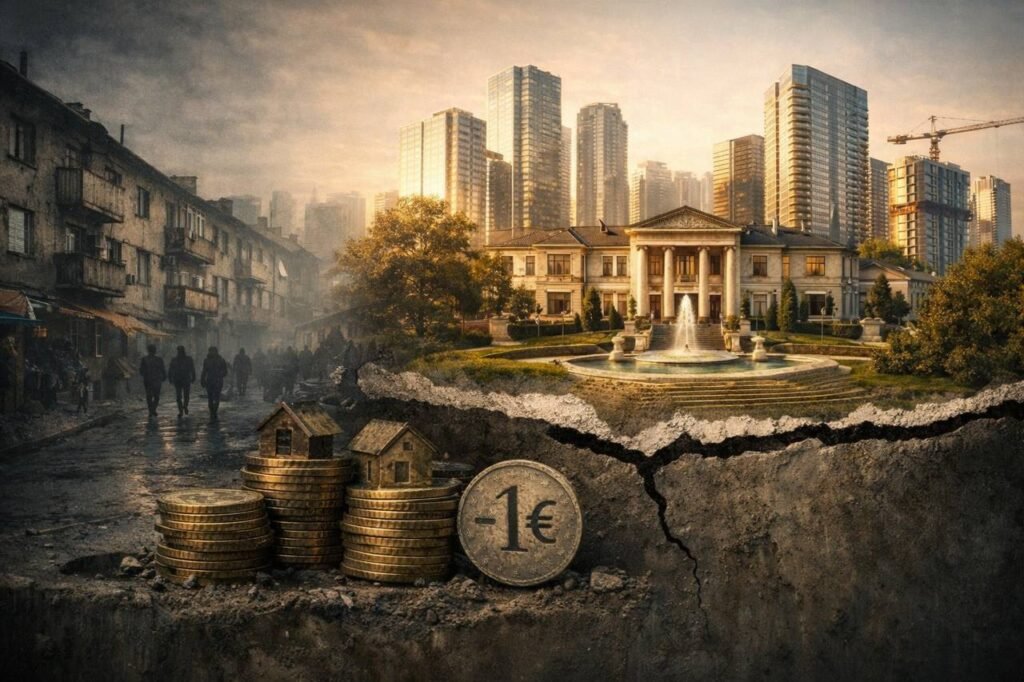
For most people, rent feels normal.
A monthly payment. A fixed obligation. A cost of living.
Rarely questioned. Rarely challenged.
Yet from an economic perspective, rent is not neutral.
It is one of the most powerful and accepted financial mechanisms in modern society.
At ATEG Capital FlexCo, we believe that understanding this mechanism is the first step toward changing it.
For more than a decade, digital assets have advanced in remarkable ways. They became faster, more secure, more programmable, more accessible, and more global. They enabled tokenization, decentralized finance, new financial instruments, asset automation, and programmable value transfer.
Yet even with all these breakthroughs, one crucial layer has been missing — silently, but fundamentally:
The layer that connects digital assets to the monthly economic rhythm of real human life.
This is the layer that ATEG introduces.
But despite all of this innovation, one essential fact remains unchanged: Human economic life does not operate in seconds.It operates
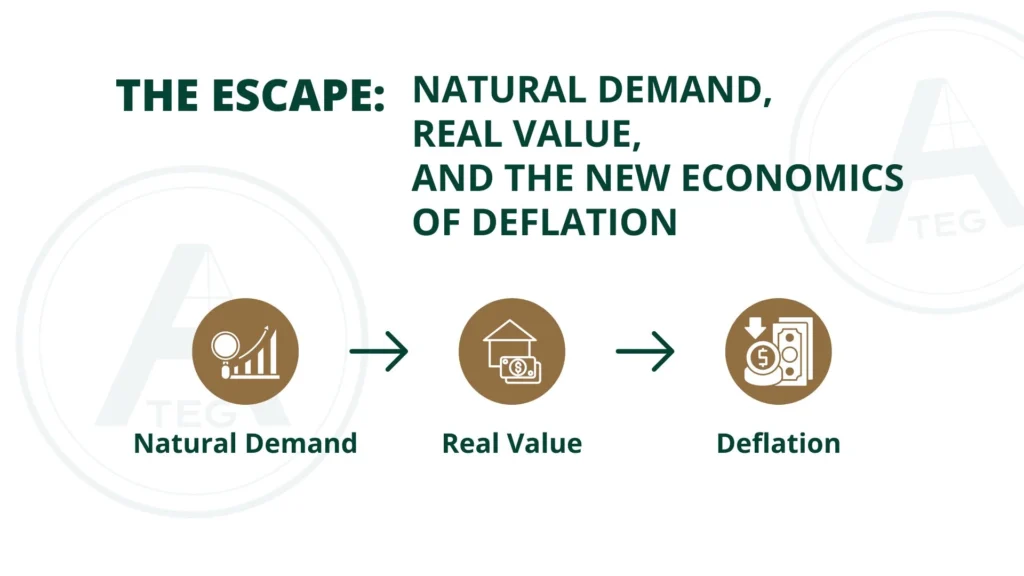
Most digital-asset systems assume that growth comes from external activity: more marketing, more visibility, more incentives, or more speculative movement. But sustainable value does not emerge from activity alone. It emerges when an ecosystem produces something that participants naturally require — and when the underlying economics strengthen as the system expands.
This article examines the core elements of a sustainable digital-economic model: natural demand, real value, and a form of deflation that enhances long-term stability rather than damaging it. Together, these components lay the foundation for a more resilient and economically grounded digital ecosystem.
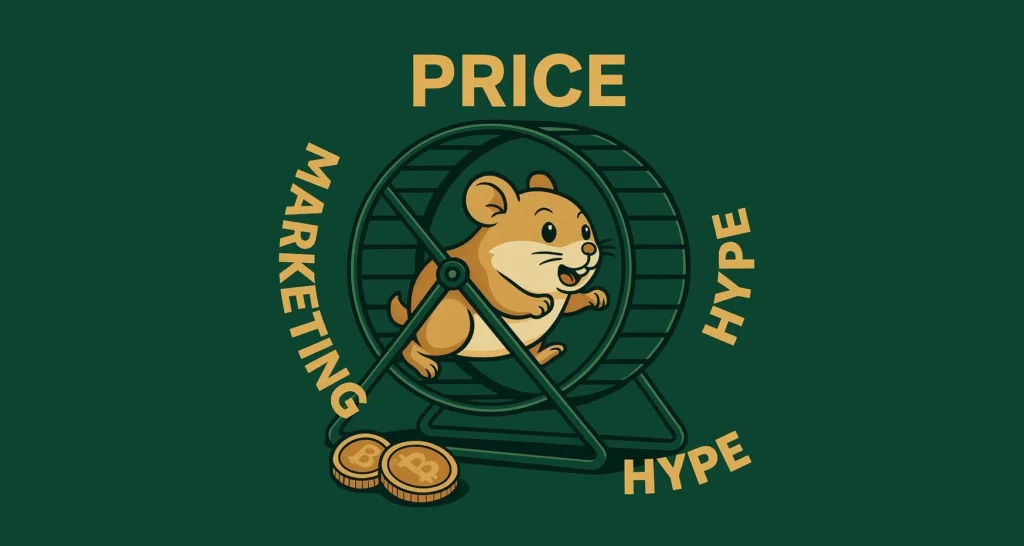
Hype is not demand. Marketing is not value. And movement is not progress.
Yet across the global digital-asset landscape, many projects rely on these three forces as if they were economic fundamentals. The result is an industry that appears dynamic from the outside, but internally repeats the same pattern again and again — a cycle that resembles a hamster wheel more than a functioning economy.
This article explains how this cycle forms, why it persists, and why distinguishing real demand from artificial momentum is essential for the future of any sustainable digital ecosystem.
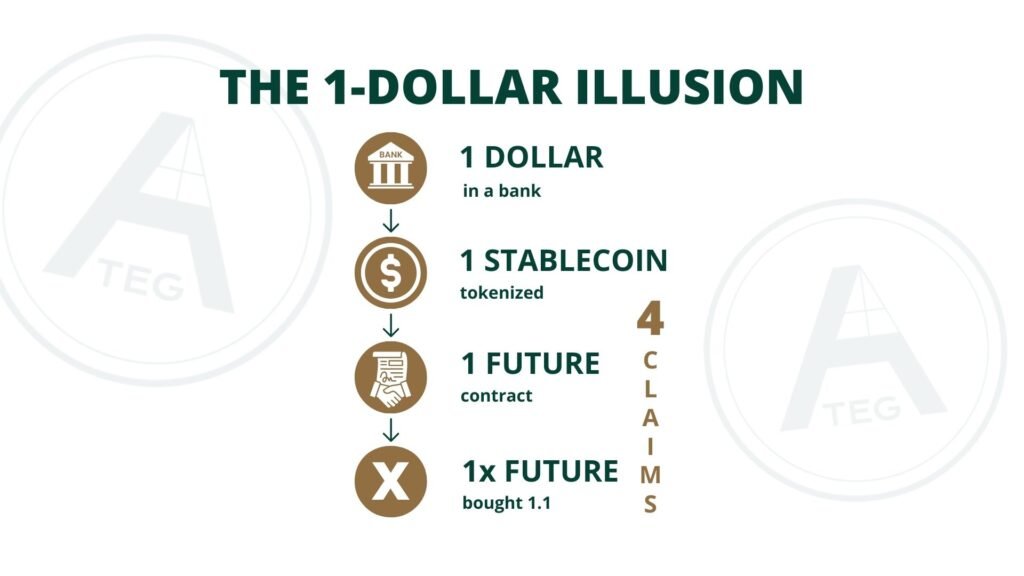
Most people assume that one dollar is a simple, stable unit of value. In reality, modern finance is built on layers of digital claims, synthetic assets, and derivative positions that multiply the “presence” of that same dollar across the system. The result is a structure where a single dollar can create multiple financial claims—without any additional real value behind it.
This article breaks down, step by step, how one dollar can effectively turn into four separate claims in today’s financial and digital markets. The purpose is not to criticize the system, but to provide clarity and transparency about how it actually works.

A new digital asset category anchored in real economics and a monthly Real Value Index.

Eine Unternehmenswebsite ist mehr als nur eine Plattform – sie ist ein Spiegelbild der Werte, Visionen und des Engagements eines Unternehmens. Bei ATEG Capital FlexCo war uns von Anfang an klar: Unsere Website muss nicht nur modern aussehen, sondern auch Klarheit, Präzision und Offenheit vermitteln.
Die Immobilien- und Finanzwelt steht vor einem Umbruch. Klassische Investoren maximieren Renditen, während Wohnraum immer teurer wird. In der Krypto-Welt drehen sich viele Projekte um Yield Farming, Staking und Liquidity Mining, wo Kapital in geschlossenen Kreisläufen bleibt – ohne echten Nutzen für die Gesellschaft.
ATEG Capital FlexCo geht neue Wege. Wir kombinieren Blockchain-Technologie mit realen Wirtschaftswerten und schaffen ein Investmentmodell, das finanziellen Erfolg mit sozialer Verantwortung verbindet.

Warum investieren Menschen? Ist es reine Mathematik? Oder ist es etwas Tiefergehendes – vielleicht sogar eine Frage des Glaubens?
Ob wir es bewusst wahrnehmen oder nicht: Investieren ist in erster Linie ein Akt des Glaubens. Niemand investiert in etwas, von dem er überzeugt ist, dass es scheitern wird. Jeder Investor bringt Kapital in ein Projekt ein, weil er daran glaubt, dass es wachsen und Rendite bringen wird.
Doch dieser Glaube ist keine Religion – er ist eine Mischung aus Psychologie, Philosophie, Strategie und Methodik.

In der Welt der Kryptowährungen und Finanzmärkte gibt es immer wieder Schlagzeilen über Pump-and-Dump-Strategien, künstliche Nachfrage und Marktmanipulation. Projekte werden kurzfristig gehypt, Investoren springen auf den Zug auf – nur um dann enttäuscht zurückgelassen zu werden, wenn der Preis durch plötzliche Verkaufswellen wieder einbricht. Doch ist das wirklich die Zukunft eines nachhaltigen Finanzsystems?